Solar & Roofing for Business & Agriculture
Solar, batteries, roofing and EV chargers for businesses, farms and ranches in Boise, Meridian, Nampa, Kuna, Mountain Home, Coeur d'Alene, Post Falls, Sandpoint and Moscow. Installed by highly vetted installer partners and managed by the Idahome Energy team.
30%
Federal credit, projects under 1 MW AC
12/31/2027
Placed in service deadline for new solar
75%
Max REAP grant plus loan share
RCE 65198
Licensed Idaho contractor
Large-Scale Solar Solutions
From small shops to farms, we design commercial solar around your real usage, your utility's rules and the federal deadlines that apply in 2026.
Large-Scale Solar
Rooftop and ground mount systems for businesses and farms, sized from 12 months of your utility data and your utility's size limits.
Ground Mounts & Carports
Open-field installations for farms and ranches, plus solar carports that generate power while shading vehicles.
Commercial Battery Storage
Batteries that store solar energy and discharge it when grid power costs you the most, plus backup power for critical loads.
Utility Coordination
Interconnection applications, permits and utility paperwork handled for you, start to finish.
Bring More Customers With Free EV Chargers
EV drivers use the Tesla app to find places to charge. Get Level 2 chargers at no cost, and your business can become one of those places. We install, own and maintain them, and reimburse you for the electricity they use.
Learn how it worksIndustries We Work With
Commercial Properties
Office buildings, retail, hotels, restaurants, warehouses
Agricultural Operations
Dairy farms, crop operations, irrigation, cold storage, processing
Places of Worship
Churches, temples, community centers
Industrial Facilities
Manufacturing, distribution, auto shops, storage
Licensed Idaho contractor
RCE 65198
Your Building Is Your Biggest Untapped Asset
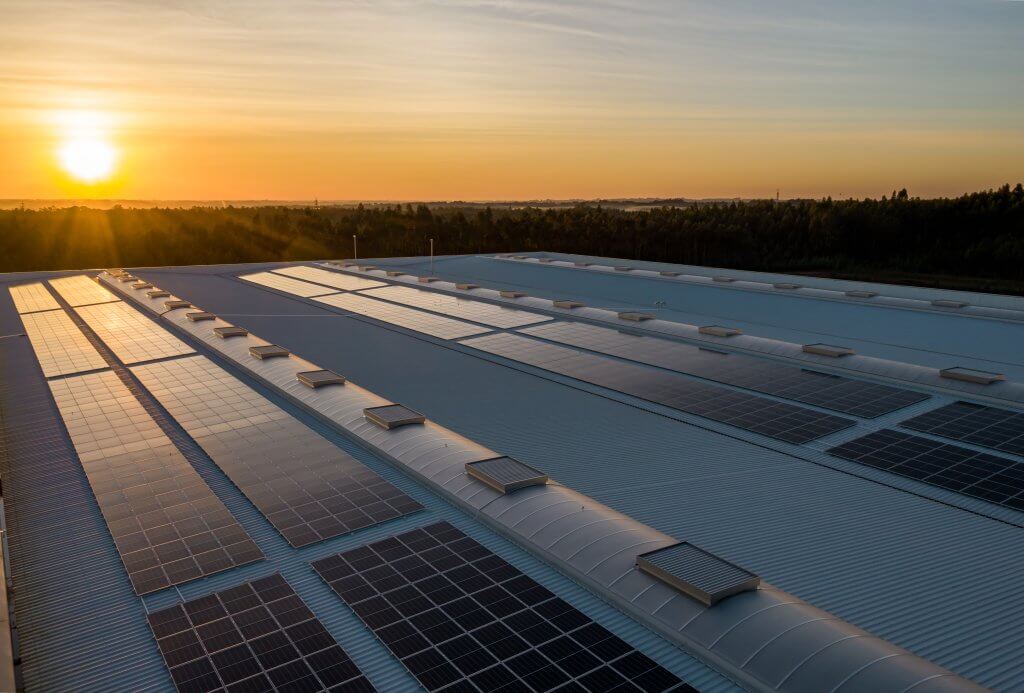
Commercial rooftops, parking lots, and open land are prime real estate for solar generation. Every square foot of unused space is a missed opportunity to reduce operating costs.
For businesses, the main federal incentive is now the Section 48E clean electricity investment credit. Solar that did not begin construction by July 4, 2026 must be placed in service by December 31, 2027 to qualify, so timing matters more this year than ever.
Your utility decides how the power you export is credited, and the rules differ between Idaho Power, Avista, Kootenai Electric Cooperative and Clearwater Power. We design to your utility's actual rules, not a generic estimate.
Government Incentives & Tax Benefits
Federal and USDA rules changed in 2025 and 2026. Here is where they stand as of October 2026.
Section 48E Credit
Businesses can claim a 6% base credit, or 30% if the project meets prevailing wage and apprenticeship rules or is under 1 MW AC. Solar that began construction after July 4, 2026 must be placed in service by December 31, 2027.
Bonus Adders and Sourcing Rules
Domestic content and energy community adders can each add 10 percentage points when eligible. Projects that begin construction in 2026 must also meet the new prohibited foreign entity (FEOC) material assistance rules.
Depreciation
100% bonus depreciation was restored for qualifying property acquired after January 19, 2025. How the rest of the system is depreciated depends on your situation, so confirm with your tax advisor.
USDA REAP
A new REAP rule takes effect October 16, 2026. The project must be in a rural area and finished 12 to 24 months before you apply, with 12 months of actual production data. REAP grant and guaranteed loan funds together cannot exceed 75% of project cost.
REAP Solar Limits
Under the new rule, ground mount solar on certified cropland, systems with components made in a foreign adversary country, stand-alone batteries and battery retrofits are not eligible.
Selling the Credit
Most for-profit businesses cannot take direct pay for 48E, but they can transfer (sell) the credit for cash after registering with the IRS. Tax-exempt groups, local governments and rural electric cooperatives can use elective pay.
*Not tax advice. Confirm eligibility with your tax professional. Rules as of October 2026. Idaho's solar income tax deduction (Idaho Code 63-3022C) applies only to systems serving a residence.
Commercial Solar Rules by Idaho Utility
Idaho Power
Serves Boise, Meridian, Nampa, Kuna, Eagle, Caldwell and Mountain Home. Large general, large power and irrigation accounts use Schedule 84 net billing: exported energy is credited in dollars at the export credit rate, and credits carry forward against monthly charges. Systems can be sized up to the greater of your highest 12 month billing demand or 100 kW, and for irrigation 1 horsepower counts as 0.8 kW. Small general service accounts use Schedule 8 with a 25 kW limit. All systems must meet Schedule 68 interconnection rules.
Avista
Schedule 63 net metering is open to commercial and pumping accounts for systems up to 100 kW. Excess kWh credits roll forward month to month and unused credits expire each March 31. The program has a cumulative capacity cap, so check availability early.
Kootenai Electric Cooperative
Net metered commercial members bank excess generation as kWh. Each April the leftover bank is credited at the energy rate, capped at three times the highest monthly use, and the bank resets. KEC charges a $250 application fee and requires a final inspection.
Clearwater Power
Net metering allows up to 25 kW for small commercial and 100 kW for large commercial accounts, with a $250 or $500 application fee. Unused credits are paid on the January bill at the co-op's avoided cost, and an external lockable disconnect within 10 feet of the meter is required.
We work with businesses and farms in Boise, Meridian, Nampa, Kuna, Eagle, Caldwell and Mountain Home, and in North Idaho in Coeur d'Alene, Post Falls, Hayden, Sandpoint, Moscow and Lewiston, from offices in Boise and Post Falls. Read the Idaho Power export credit guide. KEC solar and battery guide.
Commercial Roofing & Restoration
Avoid six-figure roof replacements when restoration is an option. We offer full-service commercial roofing built to support solar integration.
Commercial Questions
Ready to Take Control of Your Energy?
Join Idaho homeowners, businesses, and farms who've made the switch to clean, affordable energy solutions.